
5 Questions to Ask Before Purchasing Positioning Equipment
Posted 14 July 2026
Choosing patient positioning equipment isn’t just a purchasing decision, it’s a patient safety decision.
With so many options available, it can be easy to focus on price, availability, or familiarity. But the reality is, the equipment you choose has a direct impact on patient outcomes, staff efficiency, and even long-term costs.
So before making a decision, here are five key questions every healthcare provider should be asking.
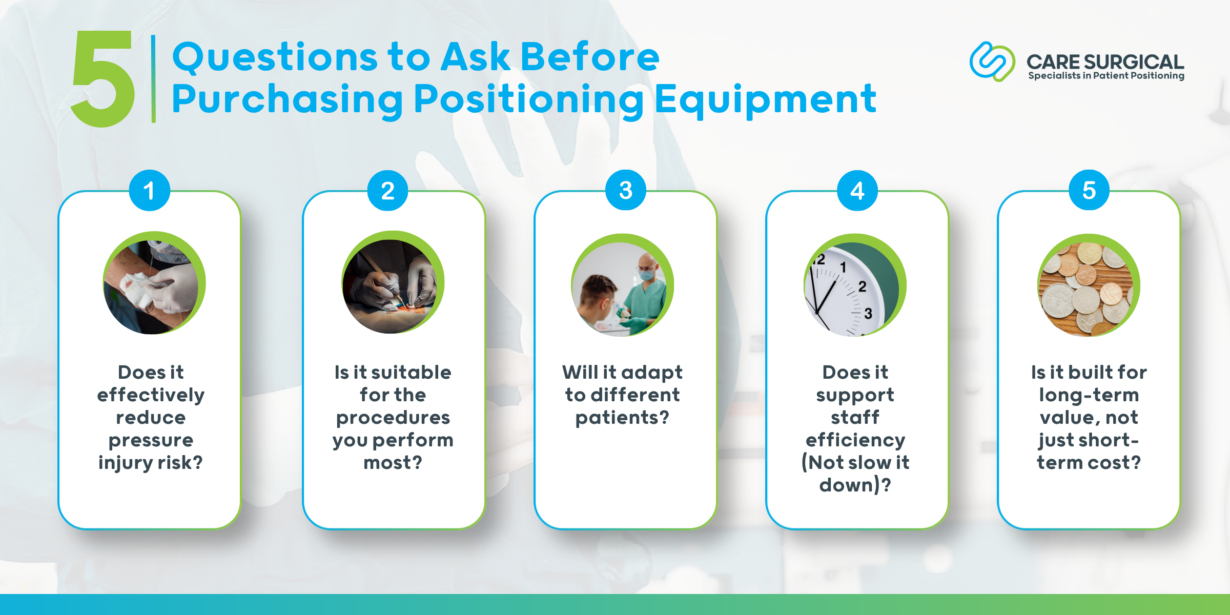
1. Does it effectively reduce pressure injury risk?
At the core of any positioning solution should be one priority: protecting the patient.
Ask yourself:
- Does this product redistribute pressure effectively?
- Is it designed for long procedures?
- Does it support high-risk areas?
Well-designed equipment should reduce pressure points and support the body evenly, not just hold the patient in place.
2. Is it suitable for the procedures you perform most?
Not all positioning equipment is designed for every scenario.
For example, prone procedures require very different support compared to supine or lithotomy positions. Equipment should be tailored to:
- The types of surgeries you perform
- The positions most commonly used
- The level of complexity involved
Solutions like the CS Prone Head Support and CS Prone Plus Head Support are specifically developed to address the unique challenges of prone positioning helping reduce pressure on the face while maintaining stability and access.
3. Will it adapt to different patients?
Every patient is different, and your equipment should reflect that.
Look for solutions that are:
- Adjustable
- Versatile
- Suitable for a wide range of body types
This is especially important in busy operating theatres, where time is limited, and consistency is key.
Products like the CS Universal Spine Extension and the CS Easy Prone are designed with flexibility in mind, helping teams achieve safe, repeatable positioning across a variety of patients and procedures.
4. Does it support staff efficiency (Not slow it down)?
The best equipment doesn’t just support the patient, it supports the team.
Ask:
- Is it quick and easy to set up?
- Does it reduce the need for repositioning?
- Can staff use it confidently without additional complexity?
- Does it minimise the need for heavy lifting or manual handling?
In high-pressure environments, simplicity and reliability are essential.
Well-designed positioning solutions should streamline workflows, not add extra steps.
5. Is it built for long-term value, not just short-term cost?
It’s easy to focus on upfront cost, but that rarely tells the full story.
Consider:
- Does it reduce the risk of complications (and associated costs)?
- Will it last or perform consistently over time?
- Have you considered the right balance of reusable and single-use solutions based on your clinical needs?
Both reusable and single-use products have an important role to play. The key is choosing solutions that are fit for purpose, reliable, and aligned with your clinical requirements.
Making the Right Choice
Ultimately, the goal isn’t just to “buy equipment”, it’s to invest in safer outcomes.
When positioning equipment is carefully selected, it can:
- Reduce pressure injury risk
- Improve patient comfort and recovery
- Support staff confidence and efficiency
- Deliver better long-term value
Patient positioning is often seen as a routine part of surgery, but the equipment behind it plays a much bigger role than many realise.
By asking the right questions before making a purchase, healthcare providers can make more informed decisions, ones that benefit both patients and clinical teams.
Because when it comes to patient safety, the details matter.
Other News & Updates

US Office Closure – 3rd July 2026
Posted 26 June 2026
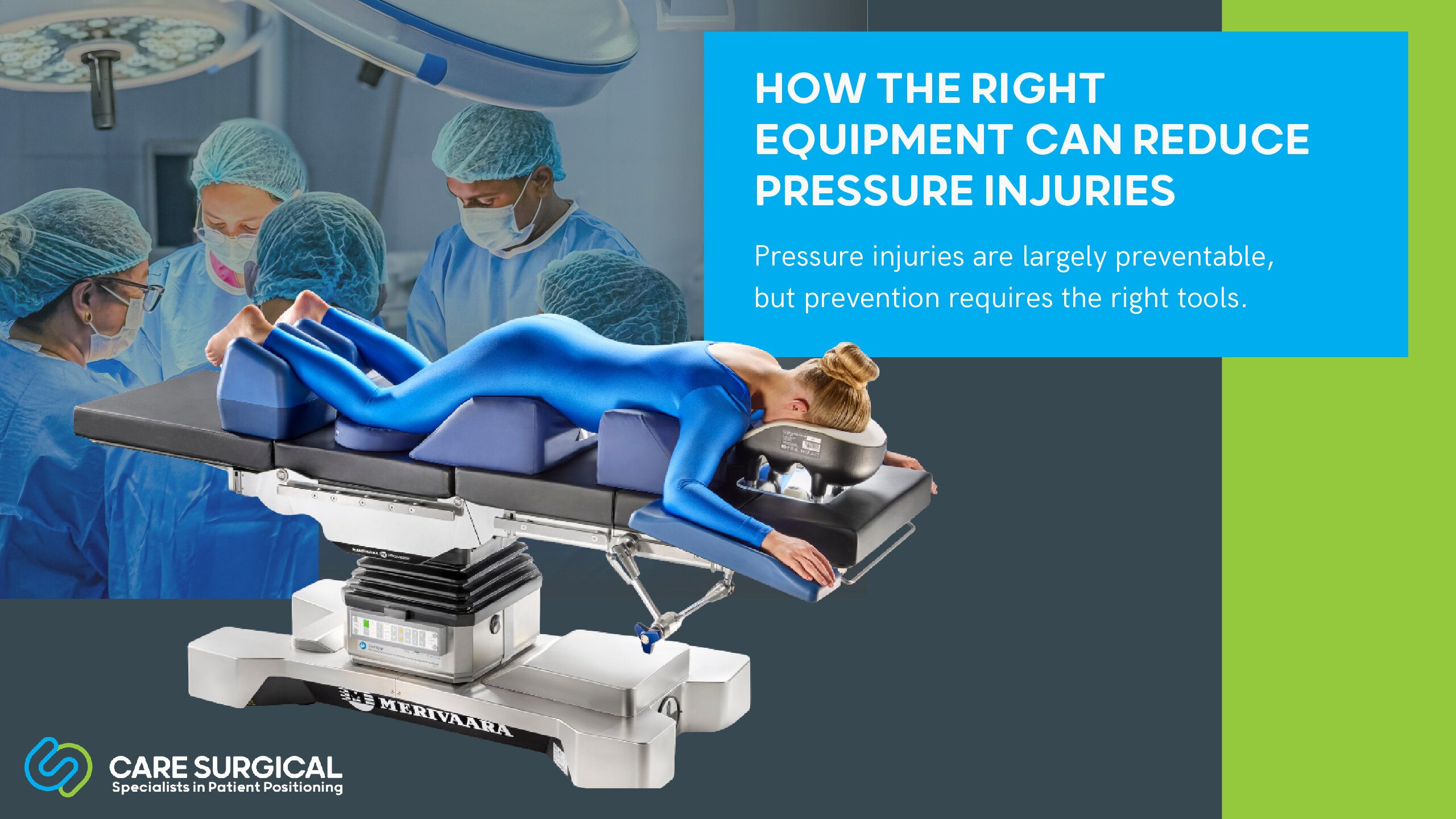
How the Right Equipment Can Reduce Pressure Injuries
Posted 25 June 2026

Care Surgical Office Closure – Monday 25th May 2026
Posted 22 May 2026