
How the Right Equipment Can Reduce Pressure Injuries
Posted 25 June 2026
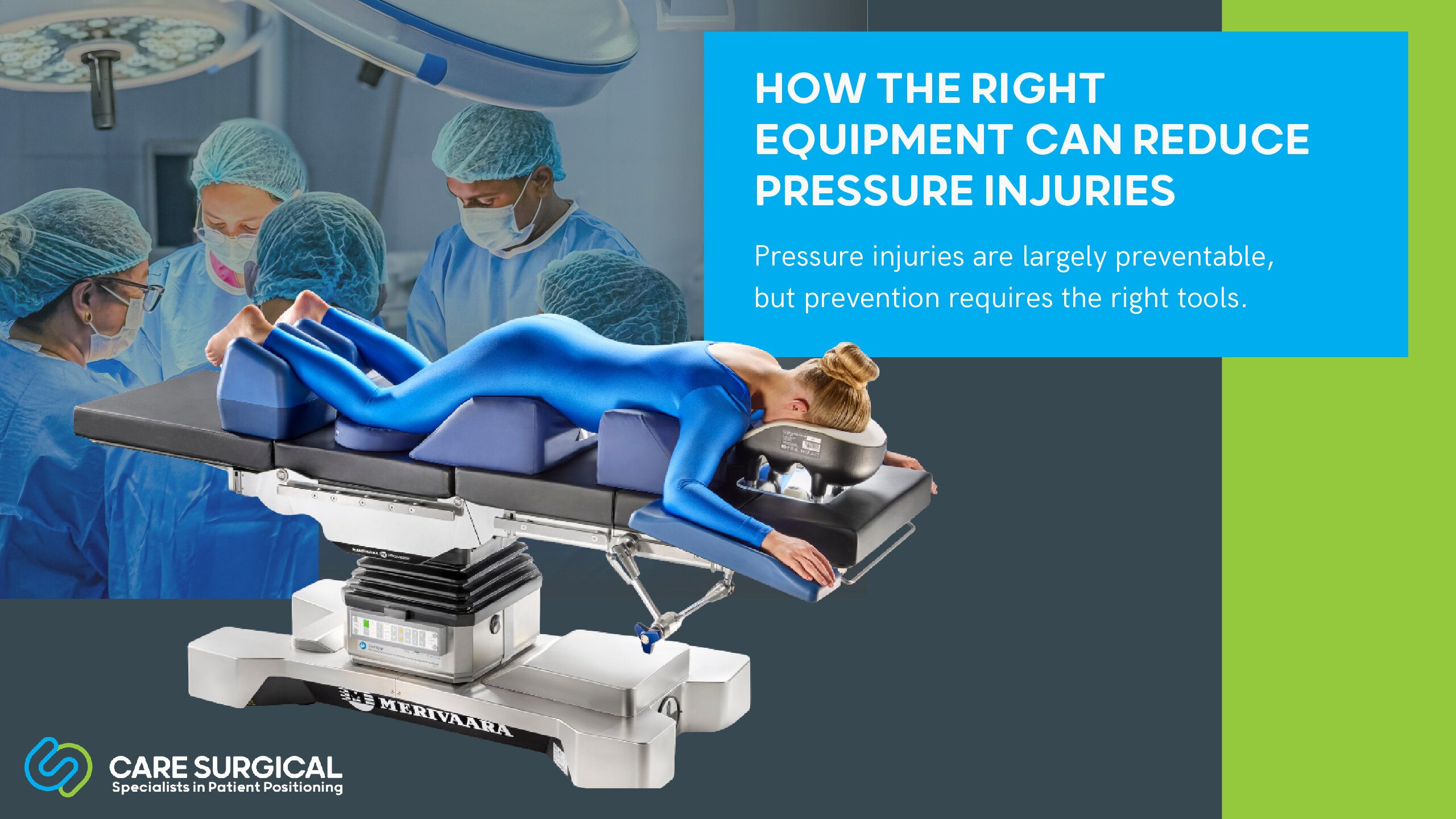
Pressure injuries remain an important consideration in surgical and clinical environments.
Despite increased awareness, they continue to impact patient recovery, extend hospital stays, and place additional strain on healthcare teams. While training and protocols play an important role, one factor is often underestimated:
The equipment being used.
The reality is simple: no matter how skilled the team is, outdated or less effectively designed positioning equipment can significantly increase the risk of pressure injuries.
So, how does the right equipment make a difference?
Why Pressure Injuries Still Happen:
Pressure injuries (also known as pressure ulcers) develop when prolonged pressure and shearing forces restrict blood flow to the skin and underlying tissue with risk increasing over time.
In surgical settings, this risk is amplified due to:
- Immobility during long procedures
- Under anaesthesia, patients can’t reposition themselves
- Concentrated pressure on specific areas
- Complex positions, particularly prone positioning
Even with the best intentions, if pressure isn’t properly redistributed, damage can occur quickly.
The Role of Equipment in Pressure Injury Prevention
Positioning equipment isn’t just there to “hold” a patient in place, it should also protect the patient.
The right solutions are designed to:
- Distribute pressure evenly
- Reduce pressure points
- Support natural body alignment
- Adapts to the body
- Reduces shear forces
When the equipment fails to do this, the risk of pressure injuries increases, no matter how experienced the team is.
Where Traditional Solutions Fall Short:
Many healthcare settings still rely on:
- Basic supports with no adjustability
- Improvised padding such as pillows and folded sheets
- Outdated equipment
These approaches can:
- Create uneven pressure distribution
- Flatten under sustained weight
- Lack adaptability for different patient sizes or procedures
- Lack stability
Over time, this leads to inconsistent positioning and increased risk, especially in high-risk positions like prone.
How Care Surgical Equipment Makes a Difference:
At Care Surgical, patient safety and clinical practicality go hand in hand. Our positioning solutions are designed with real operating theatre challenges in mind, helping teams reduce the risk of pressure injuries without adding complexity.
1. Advanced Pressure Redistribution
Products like the CS Prone Head Support and CS Prone Plus Head Support are designed to reduce pressure on vulnerable areas such as forehead, cheeks and even remove the pressure on the chin completely.
By improving pressure distribution, they help:
- Minimise the risk of facial pressure injuries
- Maintain airway access
- Improve overall patient stability
2. Stability Without Compromise
Unstable positioning can lead to micro-movements, which increase friction and pressure over time.
Solutions like the CS Spine Frame and CS Universal Spine Extension provide:
- Secure, stable positioning
- Even weight distribution across the body
- Reduced need for repositioning during procedures
This consistency is key in preventing pressure build-up.
3. Designed for Prone Positioning
Prone positioning increases pressure injury risk compared to other positions (around 2.9x higher risk in one study) – https://pubmed.ncbi.nlm.nih.gov/38393704/
Care Surgical equipment is specifically designed to support:
- Chest and pelvic alignment
- Reduced abdominal compression
- Improved circulation and ventilation
By supporting the body correctly, pressure is redistributed more effectively protecting high-risk areas.
4. Adaptability Across Patients and Procedures
No two patients are the same.
Our solutions are designed to be:
- Adjustable
- Versatile
- Suitable for a wide range of body types and surgical needs
This ensures consistent pressure management, regardless of the scenario.
Beyond Equipment: Supporting Clinical Best Practice
While the right equipment plays a crucial role, it works best alongside:
- Proper training
- Clear positioning protocols
- Team communication
That’s why initiatives like hands-on training events and workshops are essential, to help teams maximise the benefits of the equipment they use every day.
The Bigger Picture: Improving Outcomes and Efficiency
Reducing pressure injuries isn’t just about patient safety, it also impacts:
- Recovery times
- Length of hospital stay
- Clinical workload
- Healthcare costs
- Legal implications
By investing in better positioning equipment, healthcare providers can improve outcomes while also increasing efficiency within the operating theatre.
Pressure injuries are largely preventable, but prevention requires the right tools.
When positioning equipment is designed with patient safety, pressure redistribution, and clinical usability in mind, it becomes a powerful part of the solution, not part of the problem.
In high-risk environments like surgery, small improvements in positioning can make a lasting difference.
Other News & Updates
Join us at NASS 2026
Posted 30 September 2026
Join us at Europsine 2026
Posted 23 September 2026
Join us at IGPP North
Posted 27 August 2026