
Common pressure points in the prone position
Posted 29 October 2026
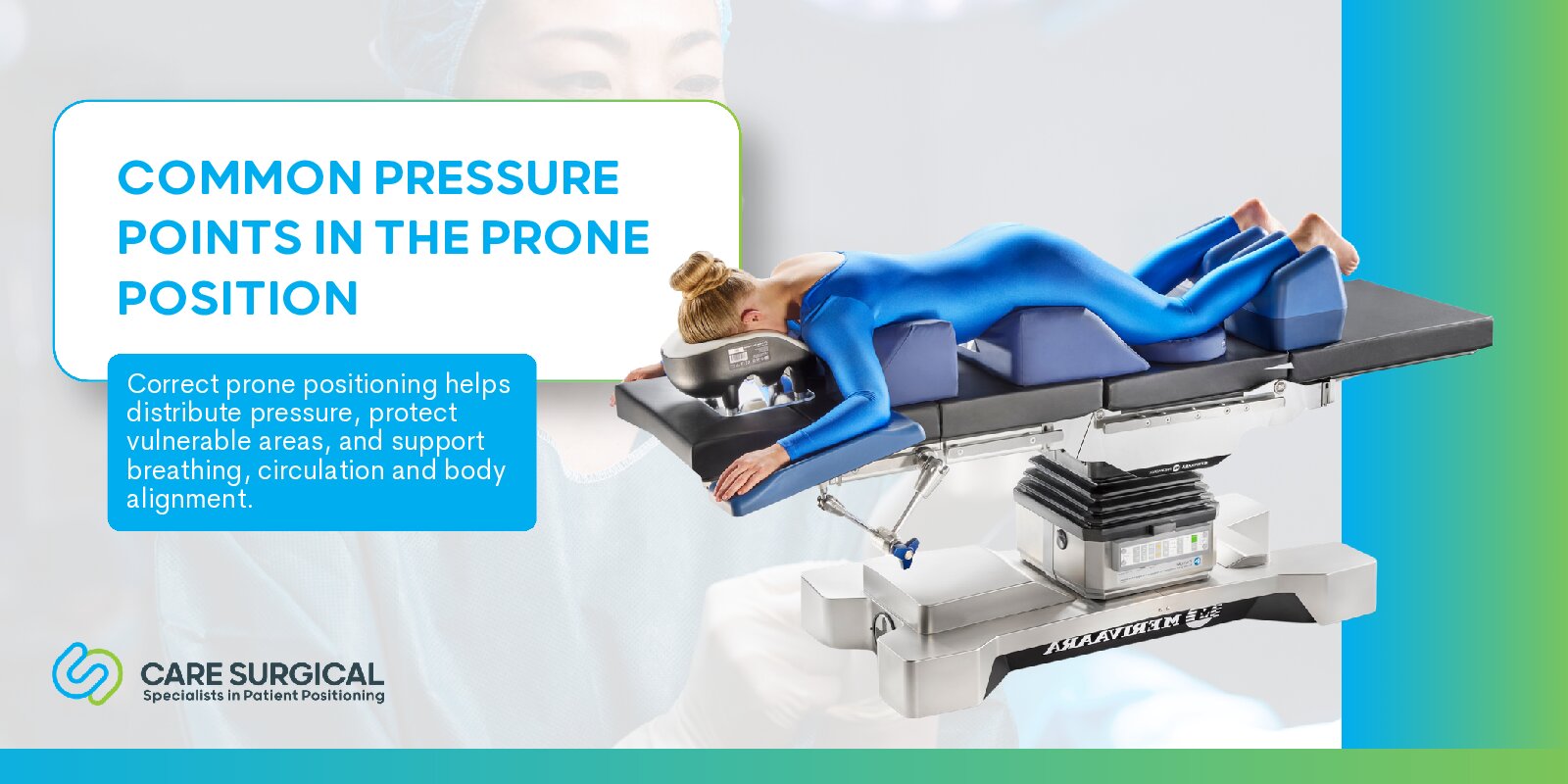
Correct prone positioning helps distribute pressure, protect vulnerable areas, and support breathing, circulation and body alignment. The longer someone remains prone – and the less able they are to move – the more important careful positioning and regular checks become.
The areas below are common pressure points to consider when positioning a patient. The risk of injury depends on factors such as how long the person remains in position, their health and mobility, and the support surface being used.
Head and face
- Eyes: Keep the eyes and the area around the eyes (including eyebrows) free from direct pressure. Pressure on the eyes during prolonged medical or surgical positioning can cause serious injury.
- Forehead, chin and cheeks: Sustained pressure or small sliding movements can cause soreness or localized skin injury.
- Nose and Mouth: These areas are not only particularly sensitive, but also affect ventilation, which is why they should never be subjected to direct pressure. The airway must remain clear.
Upper body
- Sternum and rib cage: A chest support should distribute pressure whilst providing sufficient support to prevent hyperlordosis of the lumbar spine.
- Arms and shoulders: Plexus Damage may occur as a result of abduction. Incorrect positioning of the chest support can lead to damage to the infraclavicular neurovascular bundle.
- Elbows: The padding on the bony protrusions of the elbows is very thin. Prolonged pressure can lead to pain or skin injuries, and awkward posture can also cause nerve damage (e.g. to the ulnar nerve). Elbows should be positioned below the shoulder and table level.
- Wrists and hands: Ensure that the hands do not get trapped and that the wrists remain in a comfortable, neutral position (no bouncing) to reduce pressure and strain. Wrists should be lower than the elbow joint, with hands in pronation.
- Abdomen: The abdomen must be completely free of pressure to make sure that the ventilation pressure won’t have to be increased significantly to achieve adequate ventilation. Compression also leads to an increase in pressure in the abdominal veins, with the risk of developing superior vena cava syndrome.
Pelvis and genital area
- Pelvic bones: The iliac crests and pubic area can bear concentrated pressure. Prolonged pressure or rubbing may cause tenderness, skin irritation or a pressure injury.
- Genitalia: The genital area should be completely free of pressure.
Lower extremities
- Knees: Pressure on the patella, head of the fibula and tibia should be avoided.
- Shins and ankles: Like the patella, the shins have very little padding, which is why the widest possible distribution of pressure should be ensured here. The ankles should be positioned in an elevated position so that the feet can hang freely.
- Toes and tops of the feet: The top of the foot should be exposed to protect the dorsal pedal artery. As the toes are particularly sensitive to pressure, they should be free from pressure and not rest on the operating table.
Correct positioning depends on the following factors: careful preparation and the provision of suitable positioning devices for the individual patient. Careful positioning by trained staff helps to prevent injuries not only to the patient but also to the staff. Soft materials that also provide support help to prevent soft tissue and nerve damage.
Patient positioning is an ongoing process and should therefore be checked at regular intervals throughout the procedure, and any shear forces that may have developed should be counteracted.
Other News & Updates
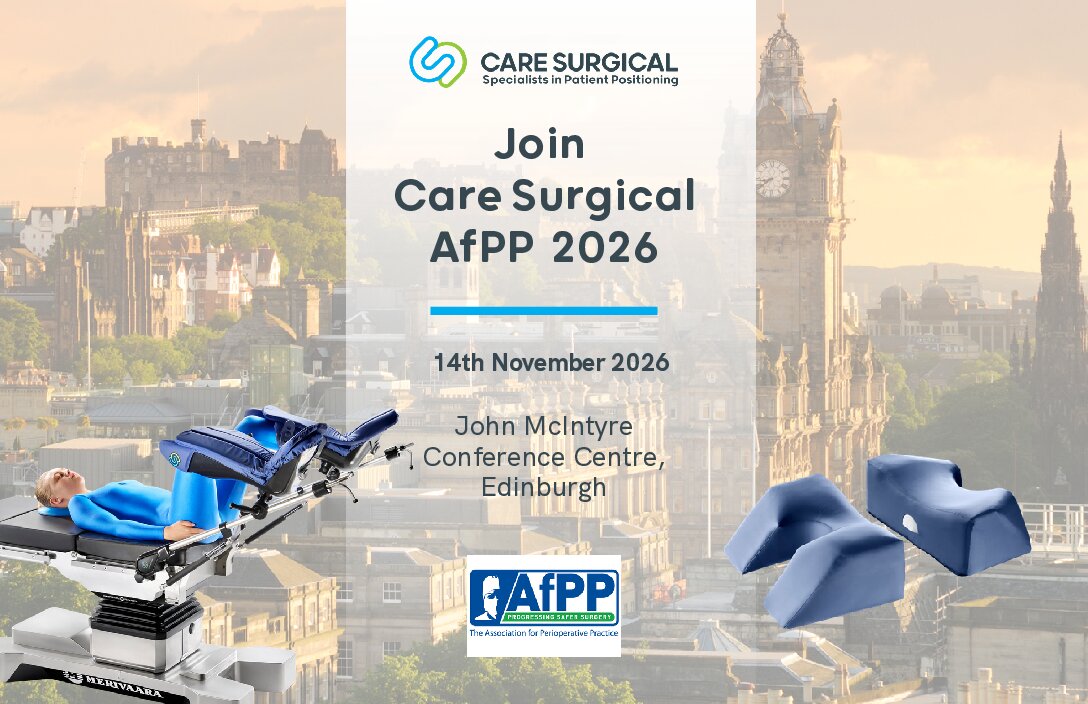
Join us at AfPP Edinburgh 2026
Posted 30 October 2026
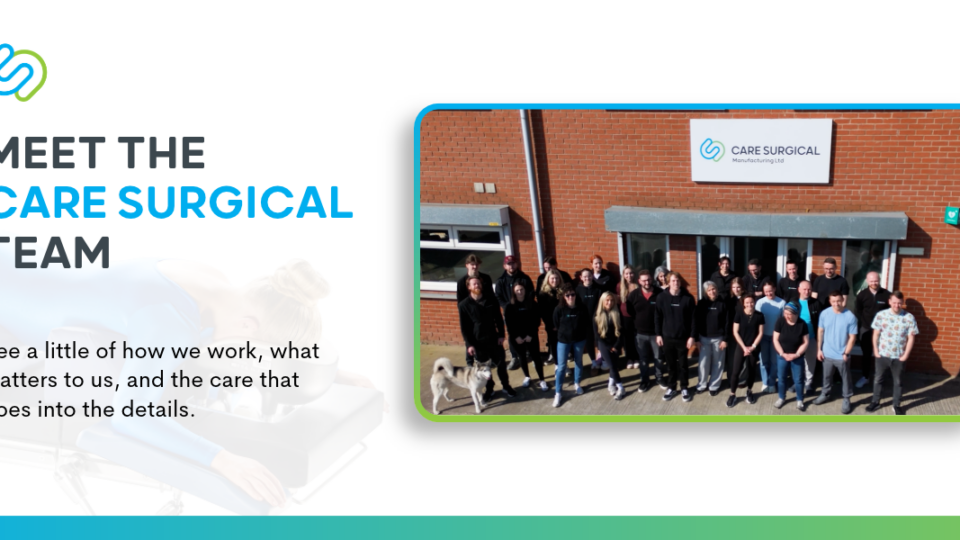
Meet the People Behind Care Surgical!
Posted 20 October 2026
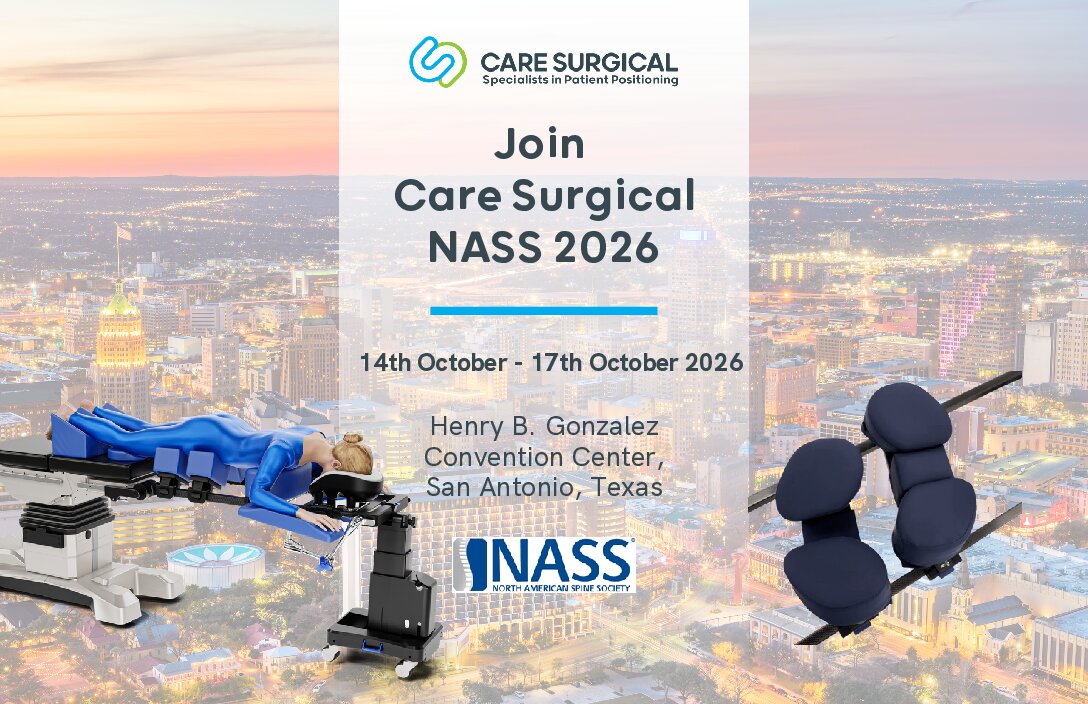
Join us at NASS 2026
Posted 30 September 2026